
Complacency Never Announces Itself
Nobody wakes up in the morning and says,
“Today I’m going to become complacent.”
It doesn’t happen overnight.
It doesn’t arrive with an alarm.
It slips in quietly.
It disguises itself as confidence.
As routine.
As familiarity.
Professionals are rarely defeated because they don’t know what to do.
More often, they’re defeated because they’ve done it so many times that they stop paying attention.
Complacency isn’t the absence of knowledge.
It’s the absence of discipline.
The Cockpit
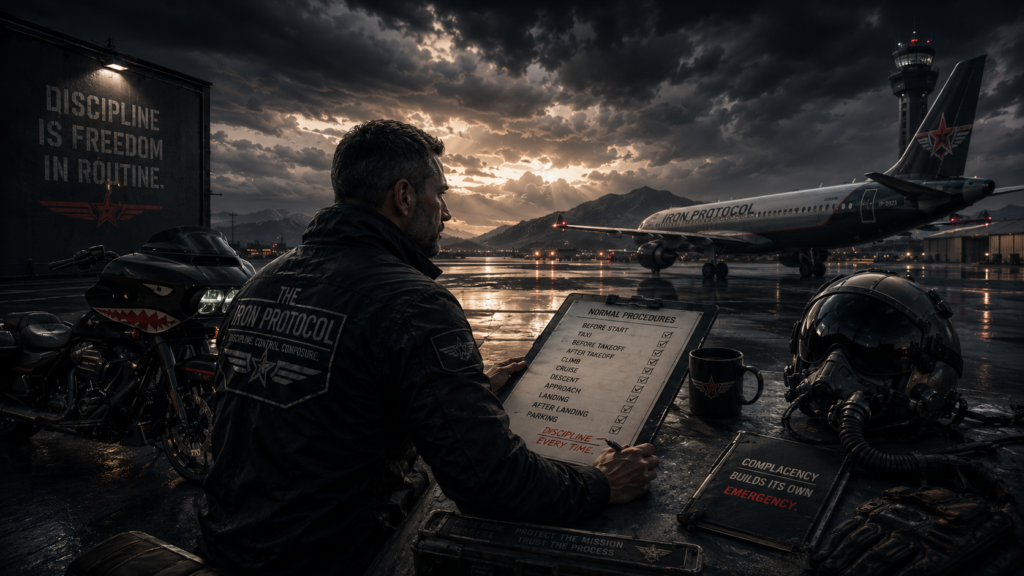
Every airline pilot in the world knows the normal checklists by heart.
Before Start.
Taxi.
Before Takeoff.
After Takeoff.
Climb.
Cruise.
Descent.
Approach.
Landing.
After Landing.
Parking.
After hundreds—sometimes thousands—of flights, reading those checklists almost feels unnecessary.
That’s exactly why professionals still read them.
Not because they don’t know them.
Because they’re human.
Normal procedures don’t usually happen under stress.
They happen during routine.
And routine is where attention quietly fades.
A single forgotten switch.
A missed configuration.
One item skipped because “I’ve done this a thousand times.”
That single omission can create the emergency you never had.
People often ask why so many airline accidents occur during the approach phase.
Is it the most difficult part of the flight?
Not necessarily.
It’s often because the destination is finally in sight.
After hours in the air, there’s an unconscious feeling that the job is almost over.
You relax just enough.
Home feels close.
That’s when discipline matters the most.
The checklist isn’t there because pilots have poor memories.
It’s there because discipline protects us from complacency.
The greatest quality of a professional pilot isn’t intelligence.
It isn’t skill.
It’s the willingness to do what needs to be done…
Exactly the way it should be done.
Every single time.
The Road
Motorcycles don’t come with checklists.
But they demand the same discipline.
The roads closest to home often become the most dangerous.
Not because they’re difficult.
Because they’re familiar.
You know every intersection.
Every curve.
Every traffic light.
Until the day something changes.
A truck drops gravel.
Someone spills diesel.
A distracted driver crosses the centerline.
Construction changes the road you’ve ridden for years.
The road doesn’t care how familiar you are with it.
Your neighborhood is someone else’s first ride.
Just as their neighborhood is your first ride.
Every road deserves your full attention.
Especially when someone is sitting behind you.
Your passenger isn’t trusting your confidence.
They’re trusting your discipline.
The Range
Negligent discharges rarely happen because someone doesn’t know how a firearm works.
They happen after someone becomes comfortable.
Comfort lowers attention.
Attention prevents mistakes.
The firearm doesn’t know whether you’ve handled it ten times…
Or ten thousand.
It demands the same respect every single time.
Skill is never a replacement for discipline.
The moment you stop respecting the process…
You’re already behind it.
Life
Complacency isn’t limited to cockpits, roads, or shooting ranges.
It quietly finds its way into everyday life.
We stop calling the people we love because we assume they’ll always be there.
We ignore small health issues because they don’t seem urgent.
We postpone saving money because there’s always another paycheck coming.
We stop improving because we’re comfortable where we are.
Then one day…
The small things become big things.
Discipline isn’t about making life harder.
It’s about making tomorrow easier.
Look around from time to time.
Ask yourself what truly matters.
Take care of your relationships.
Protect your health.
Save for the future—even if it’s only a few dollars.
Lead by example.
The things that matter most deserve your attention long before they demand it.
The Iron Protocol
Complacency never arrives wearing a warning sign.
It arrives disguised as experience.
As routine.
As confidence.
That’s why professionals don’t trust memory.
They trust discipline.
Because discipline does the right thing…
Even on the days when the mind wants to take shortcuts.
Routine doesn’t eliminate risk.
It simply changes where the risk hides.
The professional understands that every routine deserves the same respect as the emergency.
Because emergencies are often born from routines performed carelessly.